
Why pipeline theft detection must reflect regional realities
Pipeline theft is a global challenge, but it is not the same everywhere. Geography, infrastructure, fuel demand and criminal behavior all influence how theft occurs and how it can be detected. Yet theft detection strategies are often designed as if pipelines operate under uniform conditions.
Evidence from Asia shows why this approach falls short. Dense jungle terrain, long-distance pipelines, coastal and subsea infrastructure and highly adaptive criminal networks create theft scenarios that generic detection systems struggle to address. Real-world experience demonstrates that effective theft detection must be shaped around regional realities, not standard assumptions.
In this blog by Sales and Senior Research Engineer Harry Smith, he discusses:
- Pipeline theft as a regional problem
- How pipeline theft actually happens in Asia
- Why one size fits all theft detection fails
- What works: a layered and region-specific approach
- Evidence from real pipeline deployments
- Why region-specific theft detection is a strategic advantage
- What the evidence shows when theft detection is tailored to a region
Pipeline theft is a regional problem, not a universal one
Pipeline theft causes significant financial loss and introduces serious safety and environmental risks. Illegal tapping has been linked to fires, explosions, spills and fatalities, alongside long-term reputational damage for operators.1,2,3 Globally, illicit fuel theft is estimated to cost the industry over USD 100 billion each year in crude and refined products.4
However, the way theft occurs varies widely by region. Economic pressures, legal frameworks, geography and infrastructure all shape criminal behavior. In Asia, several factors combine to create a particularly complex theft landscape:
- High and fluctuating demand for gasoline, diesel, and jet fuel
- Expanding pipeline networks across remote jungle, coastal, and urban areas
- Criminal groups that rapidly adapt tactics to local conditions
These factors mean that theft detection strategies that work in one region may perform poorly in another.
How pipeline theft actually happens in Asia
Jungle theft and environmental concealment
In jungle environments, dense vegetation provides natural camouflage that allows illegal tapping points to remain hidden for extended periods. Thieves use foliage to conceal valves, hoses and equipment, often operating at night to reduce visibility even further (see Figure 1).
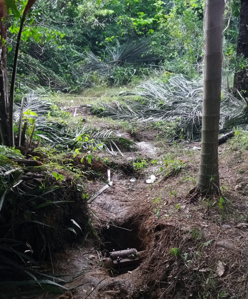
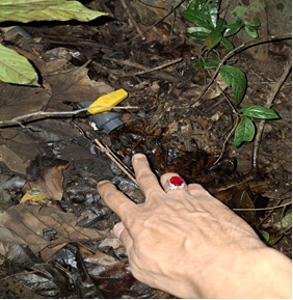
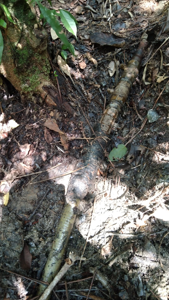
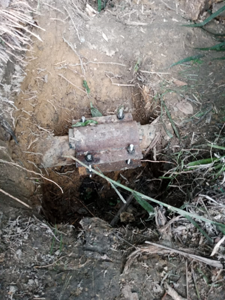
Figure 1: Illegal tapping points concealed within jungle foliage
In these conditions, physical patrols and visual inspections alone are rarely effective without reliable leak locations.
Instead of acting as a barrier, the environment itself becomes an enabler for theft.
Offshore theft
Coastal and offshore pipelines face a different class of threat. Pipelines used for unloading fuel tankers have been targeted by criminals disguising theft as legitimate maritime operations. Fishing vessels, falsified documentation and routine port activity are used to obscure illegal fuel transfers.5
Because these thefts occur below the waterline and within normal port operations, traditional surveillance methods are often ineffective. Without dedicated monitoring hardware, confirming or locating subsea theft in real time is extremely difficult.
Tunneling and organized theft networks
Tunnel theft is already prevalent in the Latin American region, with our customers uncovering multiple tunnel networks following our theft alarms in 2025 (see Figure 2), but more recently, tunneling has emerged as a theft technique in parts of Asia.6 Underground access allows criminals to tap pipelines covertly for long periods, increasing both product loss and safety risk. These operations can remain undetected until significant volumes have already been stolen, and they introduce additional hazards such as ground collapse and uncontrolled releases.
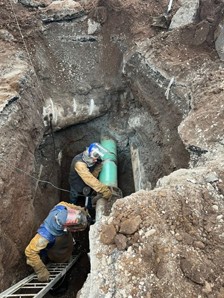
Figure 2: A 3 m deep by 7 m long tunnel dug by pipeline thieves in Latin America
Why one-size-fits-all theft detection fails
Many theft detection systems are built on assumptions that do not hold in complex operating environments. These assumptions include reliable communications, stable operating conditions and theft events large enough to trigger obvious alarms.
In practice, operators in Asia often face:
- Intermittent sensor communications in remote regions
- Small pressure or flow changes masked by normal operational variations
- Theft methods designed to avoid clear alarm signatures
When detection relies on a single method, these conditions can lead to missed events, false alarms or delayed responses. Over time, this reduces confidence in the system and allows theft activity to continue.
What works: a layered and region-specific approach
Real-world deployments show that effective theft detection in complex regions depends on combining multiple methods rather than relying on a single technique.
Real-time monitoring as a foundation
Real time monitoring methods such as negative pressure wave detection and volume balance monitoring remain essential. These systems can identify sudden changes in pressure or flow associated with illegal tapping and have generated alarms within minutes of theft activity on Asian pipelines.
Portable hardware and flexible deployment
In regions where permanent infrastructure is impractical, portable, battery-powered sensors allow monitoring systems to be deployed flexibly. A lift-and-shift approach enables operators to reposition equipment as theft patterns evolve without the need for widespread permanent installation.
On long-distance crude oil pipelines, this approach has delivered tapping point location accuracy to within tens of meters, even under challenging conditions.
Human analysis
Offline, engineer-led analysis plays a critical role when automated systems encounter limitations. By examining pressure waves, flow imbalances and data anomalies in detail, engineers can validate alarms and refine location estimates, even when some sensors fail or communications are unreliable.
This human-in-the-loop capability ensures that attempts to exploit gaps in automated detection are still identified.
Atmos created Atmos Theft Net so customers can have access to experienced engineers trained in the latest theft detection techniques to analyze their data in greater detail and locate the theft site to within meters.
Evidence from real pipeline deployments
Case studies from Asian pipelines show consistent and measurable results when region specific detection strategies are applied:
- Theft alarms raised within minutes
- Location accuracy ranging from hundreds of meters to a few meters
- Operator response times reduced from days to hours
- A deterrent effect as repeated detections reduce theft frequency
In one jungle pipeline case, an illegal tapping point was located within ±0.23 km in a 260 km long pipeline and the operators found the tapping point within two hours of the alarm (see Figure 3).
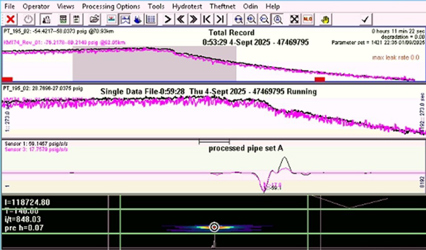
Figure 3: Atmos Wave alarm detecting theft at 03:30 am with location accuracy within ±0.23 km
On a crude oil pipeline extending more than 260 km, even pressure drops as small as 0.7 psig led to successful intervention while theft was still in progress (see Figure 4).
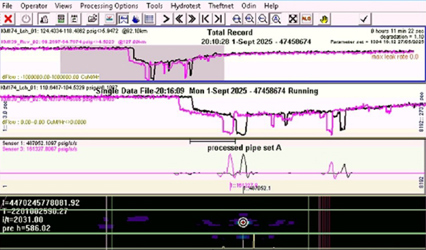
Figure 4: A pressure drop of only 0.7 psig was observed on a customer’s pipeline. Despite the small change, Atmos systems raised an alarm within a few minutes and generated a location estimate within 1.2 km of the actual site.
These outcomes demonstrate that detection systems can remain effective even in environments designed to conceal theft.
Adapting vs reacting: why region specific theft detection is a strategic advantage
Beyond immediate loss prevention, region specific theft detection delivers wider operational benefits:
- Improved safety and environmental protection
- Stronger regulatory compliance
- Reduced long-term theft through deterrence
- Greater confidence in pipeline integrity management
Most importantly, it allows operators to adapt as criminal tactics evolve instead of reacting after losses occur.
What the evidence shows when theft detection is tailored to region
Pipeline theft in Asia shows clearly that effective detection cannot rely on generic assumptions. Jungle concealment, maritime smuggling, long-distance infrastructure, and organized criminal activity all demand detection strategies designed around regional realities.
Real-world evidence demonstrates that combining real time monitoring, flexible hardware deployment and expert human analysis delivers faster detection, higher accuracy and lasting deterrence. For operators facing complex theft environments, region specific theft detection is not a luxury but a necessity.
This blog is based on a technical paper, first presented at the Pipeline Technology Conference Asia 2025, which provides deeper technical detail, full case study data and methodological insight
Download the free paper Make an enquiry
References
2 https://www.youtube.com/watch?v=LUkhrmx-f-g
3 https://www.dawn.com/news/1901263
4 https://oilmanmagazine.com/article/oil-theft-a-frightening-international-perspective
5 https://thethaiger.com/hot-news/crime/police-escort-eight-oil-tanker-crew-to-bangkok-for-questioning