
Why pipeline simulation is becoming essential for emerging hydrogen systems
An editorial by Atmos International has been published in the latest issue of Global Hydrogen Review, exploring why pipeline simulation is becoming increasingly important as hydrogen infrastructure develops. The article, written by Garry Hanmer (Principal Simulation Consultant) looks at how emerging hydrogen systems are becoming more complex, less uniform and more operationally demanding.
The article examines several major developments shaping the hydrogen sector, including new production pathways such as white hydrogen (see Figure 1), integrated hydrogen hubs and cross-border pipeline networks. Across these examples, the editorial explains how pipeline simulation can help operators and developers better understand transient behavior, manage uncertainty, support system integrity and coordinate infrastructure more effectively as hydrogen moves from ambition to operational reality.
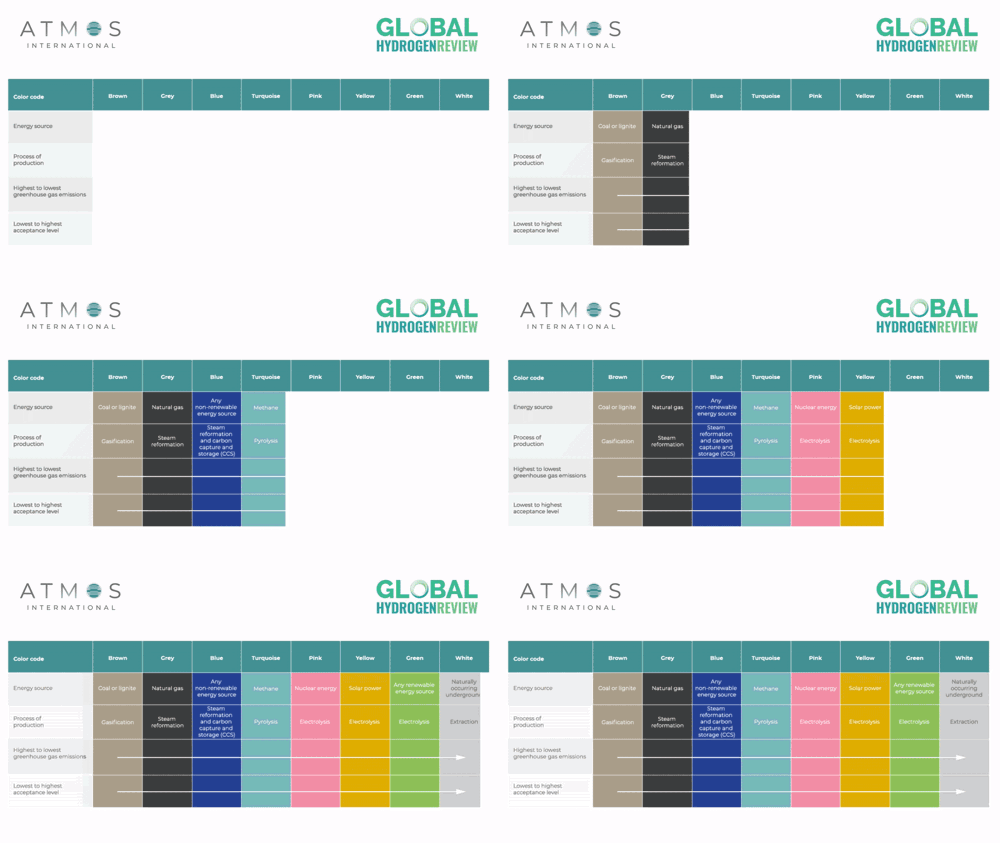
Figure 1: Different types of hydrogen and their production methods
From changing production profiles to multi-node networks and differing regulatory constraints across borders, the article shows that hydrogen pipelines will require more than conventional design assumptions. It argues that simulation is a practical engineering tool for evaluating operating scenarios in advance, identifying constraints early and supporting safer, more reliable hydrogen transportation systems.
Read our feature to discover why simulation is set to play a central role in the next phase of hydrogen infrastructure development