How better flow visibility is reshaping leakage strategies for water utilities
An editorial by Atmos International’s Business Development Director for water, Martin Duff, has been published in the March 2026 issue of Water Industry Journal.
The article explores why upstream leakage remains one of the most difficult challenges facing water utilities and how regulatory expectations are pushing the industry toward more flow-based approaches to leakage management. As pressure grows around efficiency, resilience and environmental performance, utilities are increasingly looking for more reliable ways to understand how water moves through transmission networks.
Traditionally, upstream leakage has often been estimated rather than measured due to limited instrumentation on trunk mains and the cost and disruption associated with installing in line flow meters. However, greater regulatory scrutiny and improved technology are encouraging a shift toward more direct measurement and better operational data.
The editorial examines how non-intrusive clamp-on flow monitoring can help utilities overcome these practical barriers (see Figure 1). By enabling rapid deployment without cutting into the pipeline or interrupting supply, clamp-on systems can provide flexible flow monitoring in locations that were previously difficult or costly to instrument.
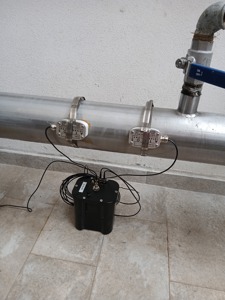
Figure 1: Non-intrusive clamp-on hardware installed on a customer’s pipeline
It also highlights several emerging use cases, including:
- Verifying trunk main meter performance
- Temporary flow monitoring during maintenance or outages
- Extending visibility into upstream network behavior
As water companies move toward more evidence led leakage strategies, access to reliable flow data is becoming increasingly important for identifying abnormal behavior, supporting investigations and strengthening regulatory reporting.