A career built on opportunity and real-world impact
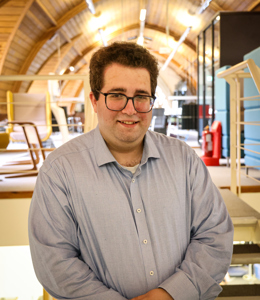
In this “Conversation with”, we sat down with Max Vasey, Senior Project Engineer at Atmos, to explore his journey into the company and his experience working on global pipeline projects.
Max shares a practical and grounded perspective on engineering, shaped by hands-on project work, customer collaboration and a strong sense of responsibility for delivering reliable systems. From supporting projects early in his career to taking on more responsibility in testing, commissioning and project delivery, his experience reflects the opportunities available to engineers at Atmos.
He also offers insight into the real-world impact of our work, from identifying pipeline theft to supporting infrastructure in challenging environments, and shares his views on the evolving challenges facing operators today.
Max answers questions about:
- His journey to Atmos and what attracted him to the company
- What his role involves day to day
- How his role has evolved since joining
- The achievement he is most proud of
- A project where he saw the real-world impact of our work
- The biggest challenges in his role and how he approaches them
- What success looks like in his position
- The key skills needed to succeed in his role
- The biggest challenges facing pipeline and infrastructure operators today
- How technology is changing the way we support operators
- How he works with clients to solve complex challenges
- What sets Atmos apart in the industry
- What excites him about the future of the industry
- What motivates him in his work
- The advice he would give to someone starting their career
What led you to join Atmos, and what attracted you to the company?
I joined Atmos immediately after graduating with an engineering degree. At the time, I was applying to a range of roles but this one stood out because it matched my background and interests.
The role was aimed at engineers, and it looked like something I could build a career in. The interview process also made a strong impression. I got on well with the people I met and it felt like a good environment to grow in, which gave me confidence that Atmos was the right place to start.
What does your role involve day to day?
My role is varied but it is mainly project-based. A typical day involves working with customers, reviewing work and progressing the projects I am assigned to.
I also support software testing, raise issues with development teams and occasionally work with sales. There is a lot of customer interaction, so communication is a key part of the role.
How has your role evolved since you joined Atmos?
I started as an Associate Project Engineer, where the focus was on training and learning how to use the software.
The first few months were about building that foundation as quickly as possible.
I was able to contribute to projects early on, where my Russian language skills were particularly useful, which helped accelerate my development.
From there, I began supporting projects with smaller tasks, such as writing documentation, testing and system setup. Over time, I took on more responsibility, including leading testing, commissioning systems on site and running meetings.
Now, I also review other people’s work and play a more active role in managing projects.
What achievement in your time here are you most proud of, and why?
One of the projects I am most proud of is a large system I worked on in Kenya. I was involved from the early stages through to delivery, which gave me the opportunity to see the full lifecycle of the project (as well as all the wildlife Kenya has to offer!).



Being part of something from initial scope through to completion makes it particularly memorable and has helped me grow as an engineer.
Can you share a project where you saw the real-world impact of our work?
There are a couple of examples that stand out.
On one project in the UK, we were able to identify theft activity on a pipeline. In one case, I was directly involved in detecting it (see Figure 1). That is rewarding because it shows the system working as intended, but also because it can help prevent environmental damage.
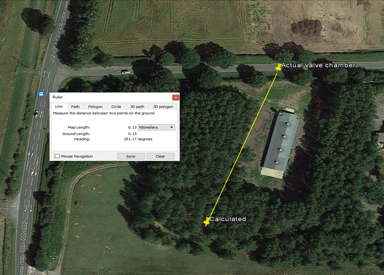
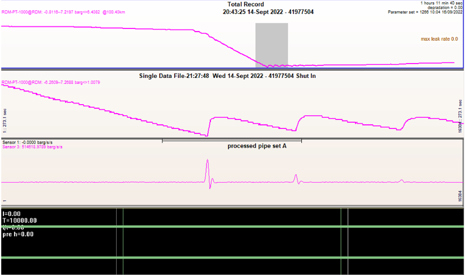
Figure 1: The calculated theft location in relation to the actual theft location with a 0.2% error (left) and the theft signature on a pipeline of 65 KM (right)
I have also worked on a trial in Eastern Europe under challenging conditions, where infrastructure is under pressure. Projects like that highlight how important reliable systems are for protecting critical assets.
What are the biggest challenges in your role, and how do you approach them?
One of the biggest challenges is communication. We work with customers all over the world and language barriers can make it difficult to explain technical requirements clearly.
The technology itself is also complex, so it is important to ensure customers understand what data is needed and why. I approach this by being clear, patient and making sure expectations are aligned from the start.
Once you have the right information, the rest of the work becomes much more straightforward.
What does success look like in your role?
Success is delivering projects on time, within budget and without unnecessary complications.
In many ways, the best projects are the ones that run smoothly and do not create issues. If everything works as expected, that is a good outcome for both us and the customer.
What skills are most important for someone in your position?
Strong data analysis skills are essential. Understanding and interpreting data is at the core of what we do.
At the same time, communication is just as important. You need to be confident in speaking with customers, explaining requirements and guiding them when needed. Even early in your career, you are seen as the expert, so it is important to communicate clearly and confidently.
In your view, what is the biggest challenge facing pipeline and infrastructure operators today?
Geopolitical factors have a significant impact. Pipelines are critical infrastructure, and changes in global conditions can directly affect how they are managed and maintained.
These factors influence budgets, priorities and project timelines, making it a complex environment for operators to navigate.
How is technology changing the way we support pipeline and infrastructure operators?
Advances in communication and data collection are making a big difference. We now have more options for collecting data from remote locations, including Atmos Odin, a battery-powered system that can operate in challenging environments.
Improvements in translation tools are also helping to reduce language barriers, making it easier to work with international customers. Overall, technology is making it easier to gather, share and act on data effectively.
How do you work with clients to solve complex challenges?
It starts with building a strong working relationship and understanding that both sides want the same outcome.
From there, it is about breaking the problem down into manageable parts and working through each one methodically. In many cases, solving a problem is about eliminating possible causes until you identify the root issue.
Patience and clear communication are key throughout that process.
What do you think sets Atmos apart in the industry?
Customer service is a key differentiator. When you are assigned to a project, you take ownership of it and feel responsible for delivering the best possible outcome.
Because we are a smaller company, we can build stronger relationships with our customers. There is a more personal approach, which helps create trust and better collaboration.
What excites you most about the future of this industry?
The opportunity to work in new markets and apply innovative technologies is exciting. As tools and systems continue to improve, there is more potential to solve complex challenges and deliver value in different environments.
What motivates you in your work?
I take pride in doing a good job. There is a sense of responsibility to colleagues and customers to deliver the best possible outcome.
That focus on quality and accountability is what drives me day to day.
What advice would you give to someone starting their career in this industry?
Take every opportunity that comes your way. If you are offered the chance to work on something new or different, say yes.
Building relationships across the business is also important. Understanding how different teams work together makes projects easier and helps you develop more quickly.
The more exposure you get, the more you will learn.